
 ‘You can kill me if you want, but don’t touch my turban’ is the loose translation of what Havildar Ishar Singh, the character essayed by Akshay Kumar in the latest Bollywood blockbuster ‘Kesari’ tells the Afghan marauders as they overrun the embattled Fort of Saragarhi located on the border of Afghanistan and present day Pakistan on 12th September, 1897. Off late, the battle, touted as one of the bravest last stands ever taken in any military conflict, has drawn considerable attention across the country because of Kesari, and two other films on the same subject which are in the pipeline, one starring Ajay Devgn and the other Randeep Hooda.
The battle is indeed an incredible saga of grit, sacrifice and determination in the face of grave adversity, something, which, from the very beginning looked like a lost cause. To what extent the film manages to convey the sentiments of the 21 soldiers of the 36 Sikh Regiment of the British Army who fought in the battle is for each one who goes to watch it to take a call, because this is not a review of Kesari, although, in my opinion the film has several fatal flaws in terms of length, editing and characterization and in no way deserves the 4 stars given by otherwise nerdy critics….for me, 2.5 is the maximum it deserves.
But now, for some serious soul searching. Without doubt what Havildar Ishar Singh said about the Sikh and his turban is true from the time the last guru, Gobind formed the khalsa and bestowed a distinct identity to the religion which had emanated as an offshoot of Hinduism and the bhakti movement. The gurus, who came after the first guru, Nanak made several sacrifices to save the Hindus from the Mughal rulers, some of whom were bigoted and had an unabashed agenda to convert the populace to Islam. It is another matter that the British landed on Indian shores and therein followed another long battle to drive them out, a struggle in which the struggle of the Sikhs goes far beyond their minuscule numbers. Also their complete integration with the Hindus never marked them for special praise or appreciation.
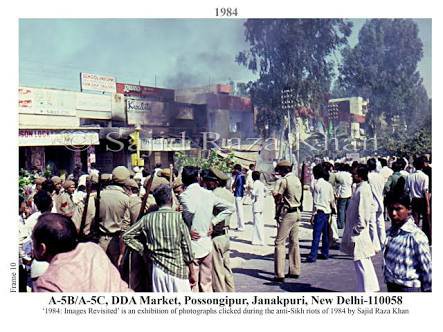
But unfortunately, as pointed out in my book Dilliz Boyz (published by Niyogi Books in 2001) the community was subject to large scale racism in the early 80’s, culminating in the 1984 pogrom in which thousands of innocent Indian citizens who happened to be Sikhs were butchered across the country and primarily on the streets of the national capital in a matter of 72 hours, their turbans, so passionately referred by Havildar Ishar Singh (even if dramatized) torn asunder, along-with the burning tyres put across their shoulders as necklaces. It took 35 painful years for the slow wheels of justice to bring one of the worst perpetrators to justice. In this time, many have left for the other world- unpunished for their crimes against humanity. Several are still free.
The Jews, who went through the holocaust, have had several films made on that dark phase of their history documenting brave stories of survival and escape, and those who helped them at the cost of being caught. Delhi has its own stories, actually many, of countless Hindu families giving shelter to their Sikh neighbors, of people standing for each other. The question is why has mainstream Bollywood not come forward and taken the challenge? Why has no film been made on the pogrom of 1984, when a proud community was brought to its knees within hours? Even when the two communities which were, and will continue to be integrated, despite the treason of a few……
 Musings of a Delhi Boy
Leave a comment